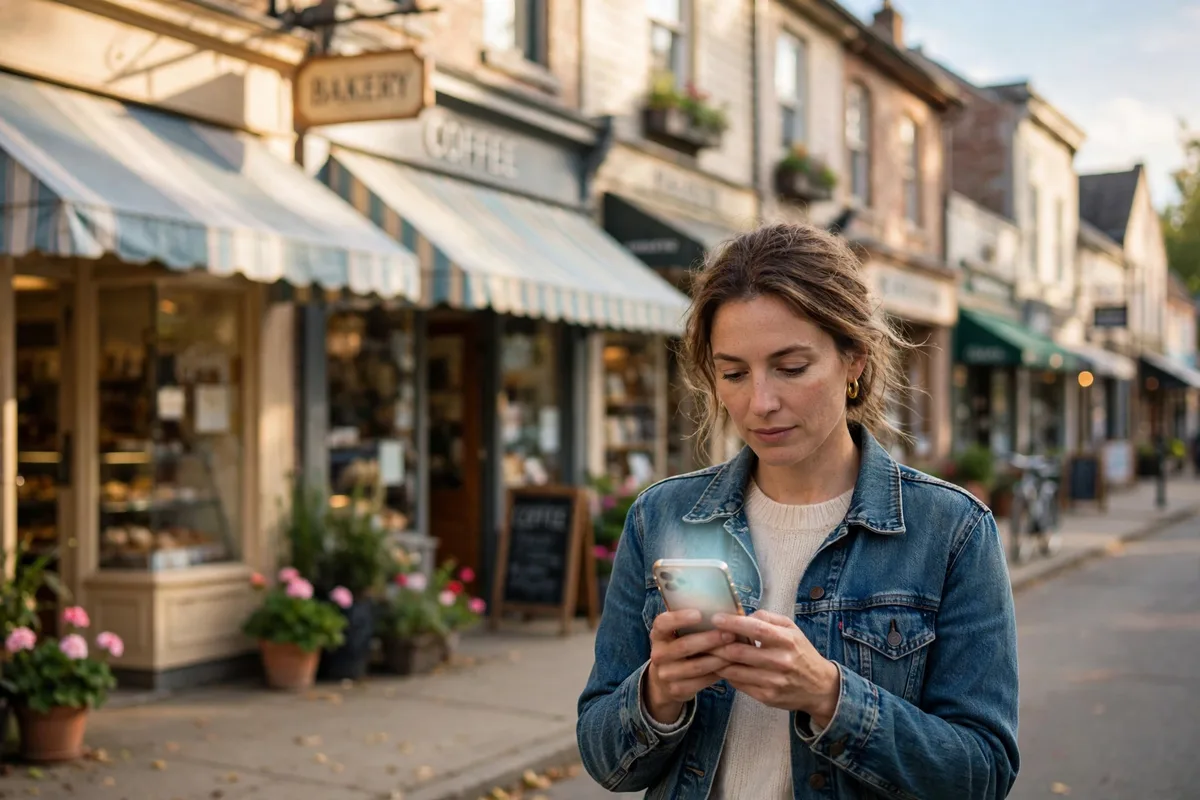
Here's a sentence worth sitting with: if customers can't find you online, for many of them you don't exist.
Most people search before they buy — the plumber, the salon, the nonprofit worth supporting. If your business has no website, you're not in that search. You're invisible at the exact moment someone is ready to choose.
Two searches, happening today
These are illustrations, not client stories. But they are the shape of searches that happen in every town, every day — and each one ends with somebody choosing.
Saturday, 9:40 a.m. — the burst pipe. A homeowner finds water pooling under the sink and does what everyone does: phone out, "plumber near me." Google hands her a short list — names, ratings, hours, tap-to-call buttons. Two streets away sits a one-van plumber who would have been there by eleven and done the job well. He is not on the list. He has no website and no real presence online, so as far as this search is concerned, he doesn't exist. The job goes to a company from across town — not better, just findable. Its website said what it does, showed the areas it covers, and let her call in one tap.
Now run the same morning the other way. The same plumber, with a simple website: his services in plain words, the neighbourhoods he covers, a photo of him and his van, a quote form and a call button that work on a phone. This time he is in the list, the tap lands on his page, and the page answers the only questions she has — do you do this, are you near me, how do I reach you — in under a minute. He gets the call. Same skills, same van. The only difference is that one version of him could be found.
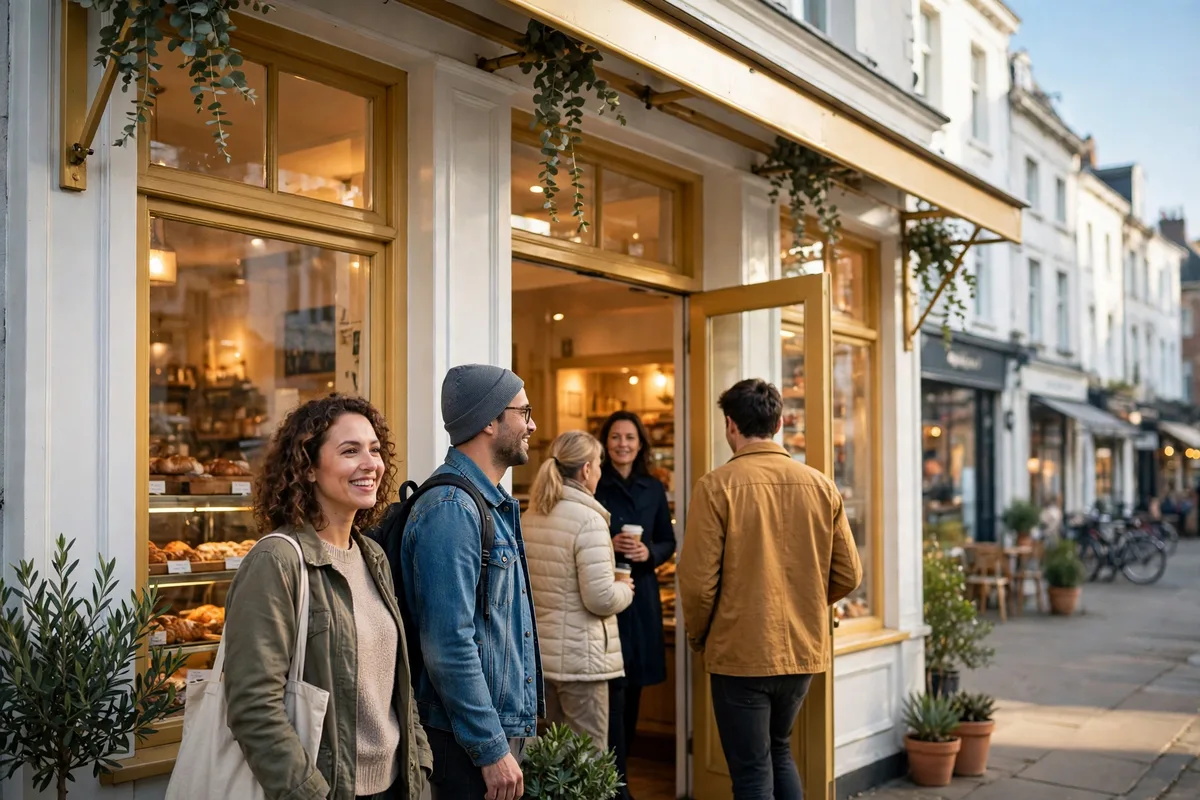
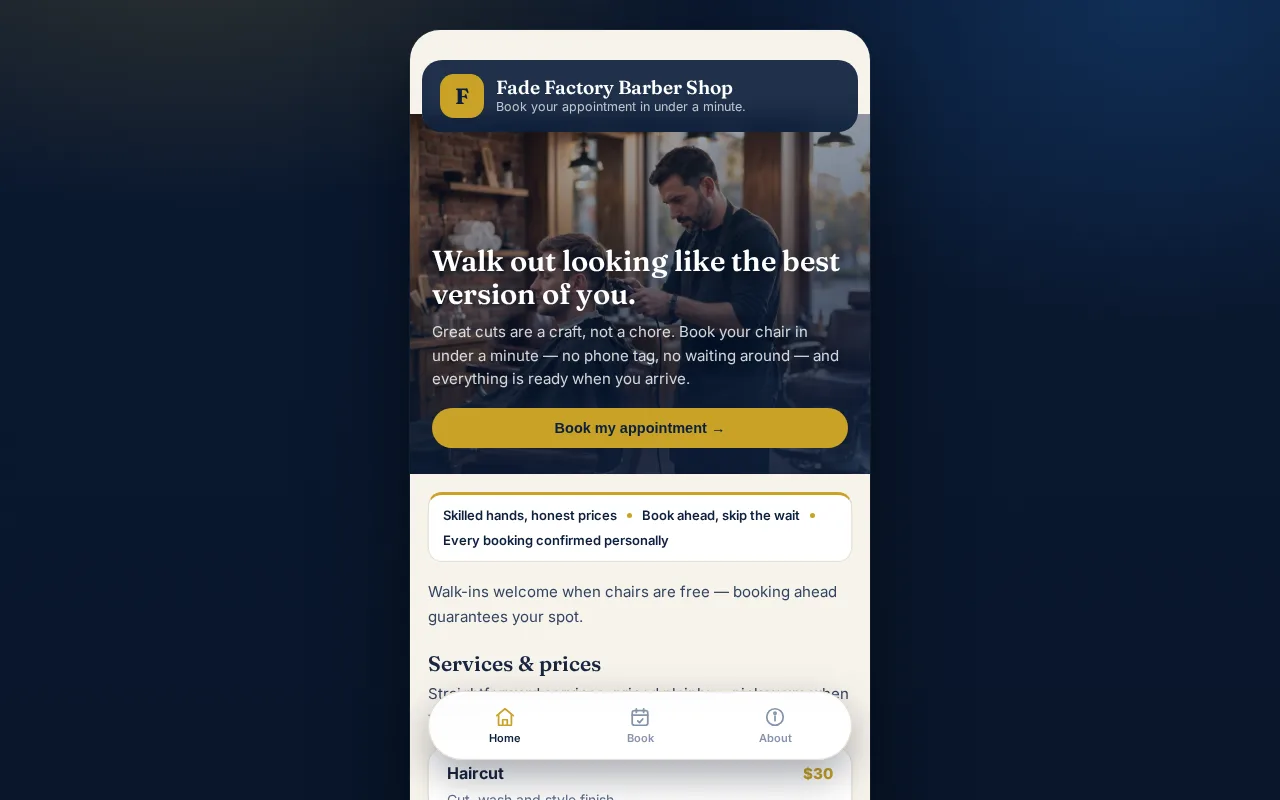
Tuesday evening — the new hair salon. A woman who has just moved to town needs a haircut before a job interview on Friday. She searches "hair salon near me" and opens the first result: a website with services, prices, photos of real work, and a Book button. Ninety seconds later she has an appointment. The second salon on her list might be just as good — but its only presence is a social page last updated months ago: no prices, no booking, no way to tell if it is even still open. She doesn't call to find out. Nobody does. She books the salon whose website answered her questions, and the other salon never learns it was considered.
This isn't a guess
BrightLocal's Small Business Marketing Report 2026 followed consumers through their most recent search for a local business and found that 61% of them started that search on Google — and 71% used Google at some point along the way. That is where the choosing starts now: not on your street, not in the phone book, but in a search box. A website is how a business is standing there when it happens. Without one, you are asking every new customer to find you some other way — while your competitors are one tap from being chosen.
A website isn't decoration
Done right, it does three jobs:
- It gets you found — showing up when people search for what you do.
- It gets you trusted — clear services, real contact details, proof you're real.
- It gets you booked — a quote form or booking link that actually works.
"But my customers come from word of mouth"
Word of mouth still works — it just doesn't end where it used to. Someone recommends you over coffee; the very next thing the listener does is search your name. What they find in that moment decides whether the recommendation turns into a customer. A website with your services, your area, and a way to reach you makes the recommendation land. An empty result — or worse, an old listing with the wrong hours — quietly undoes it. Word of mouth brings people to the search. Your website is what they find when they get there.
The fix is smaller than you think
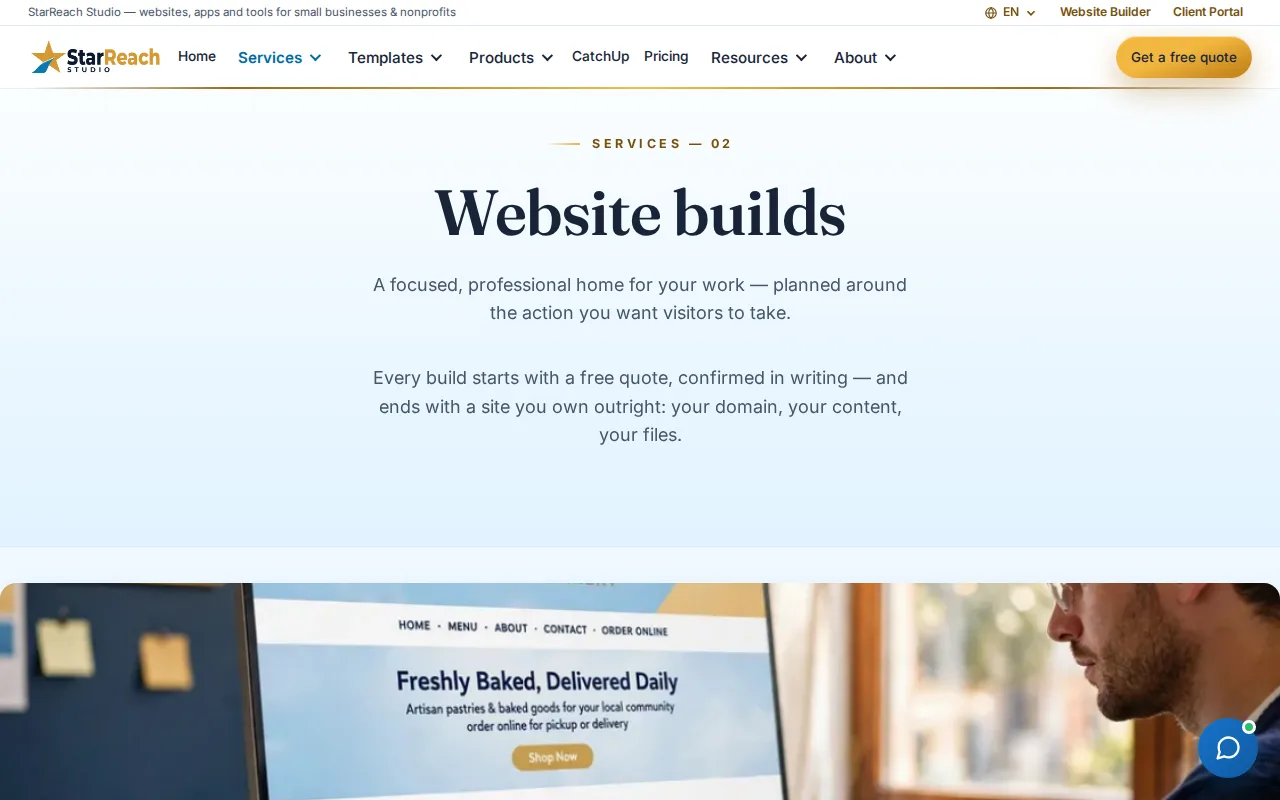
None of this needs a big website. It needs a findable one: your name, what you do, where you do it, proof you're real, and one clear way to reach you — a call button or a form that works. For a lot of small businesses that is a single honest page, and it's enough to change what the next search finds. Everything after that — more pages, bookings, follow-ups that run themselves — can grow when the business does. What can't wait is being in the search at all, because the choosing is happening there today, with or without you.
That's what we build at StarReach — websites that get you found, trusted, and booked. And if you're not ready for a full build, our Star AI builder at starreach.ca/build will draft a starter site from a few plain-word answers, free.
We made a short video about this too — find it on our Instagram, Facebook, and YouTube, all @starreachstudio.
In pictures
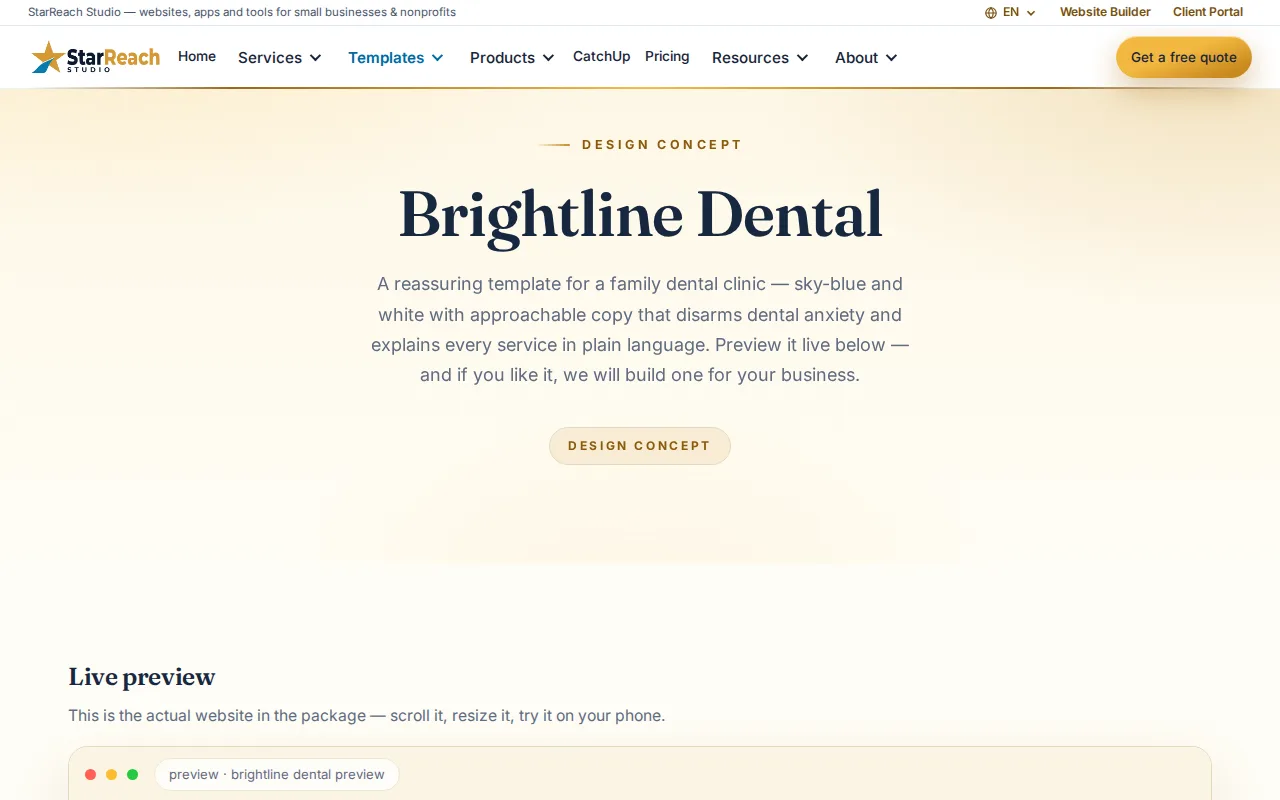
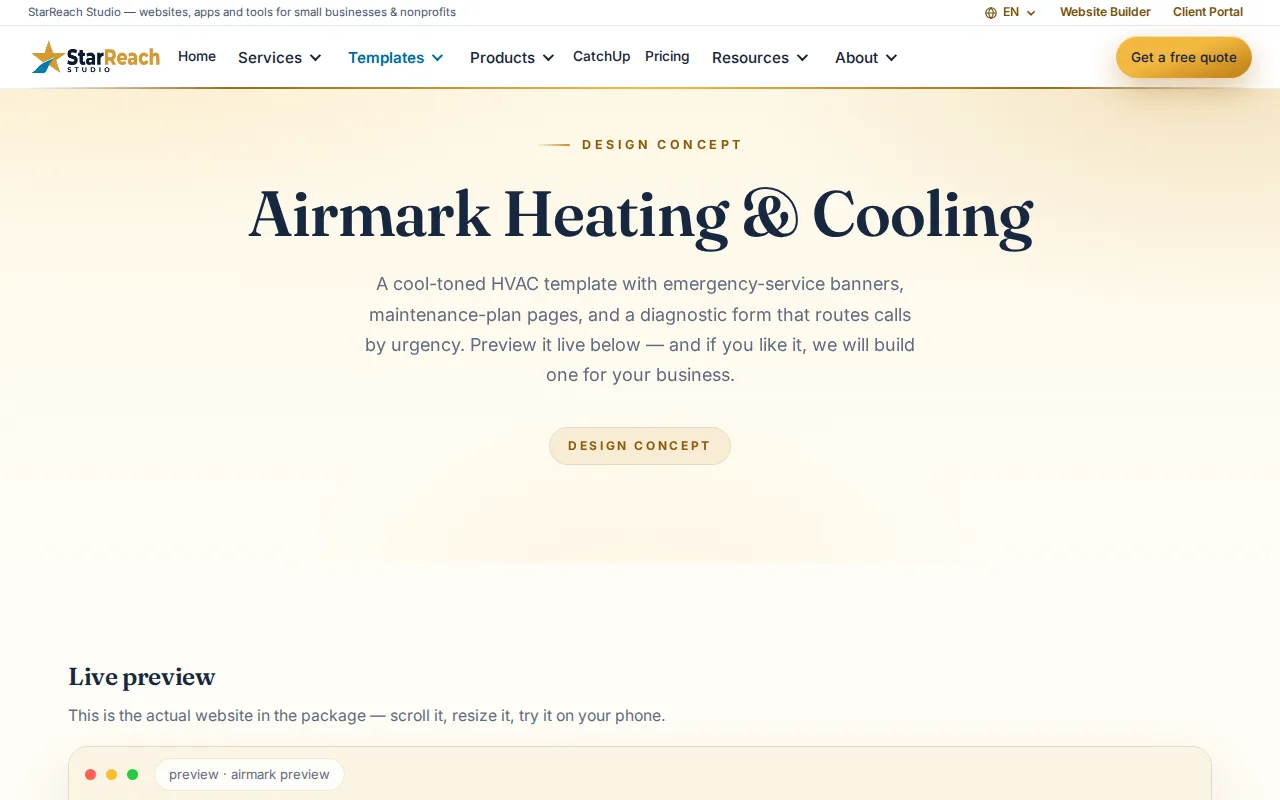
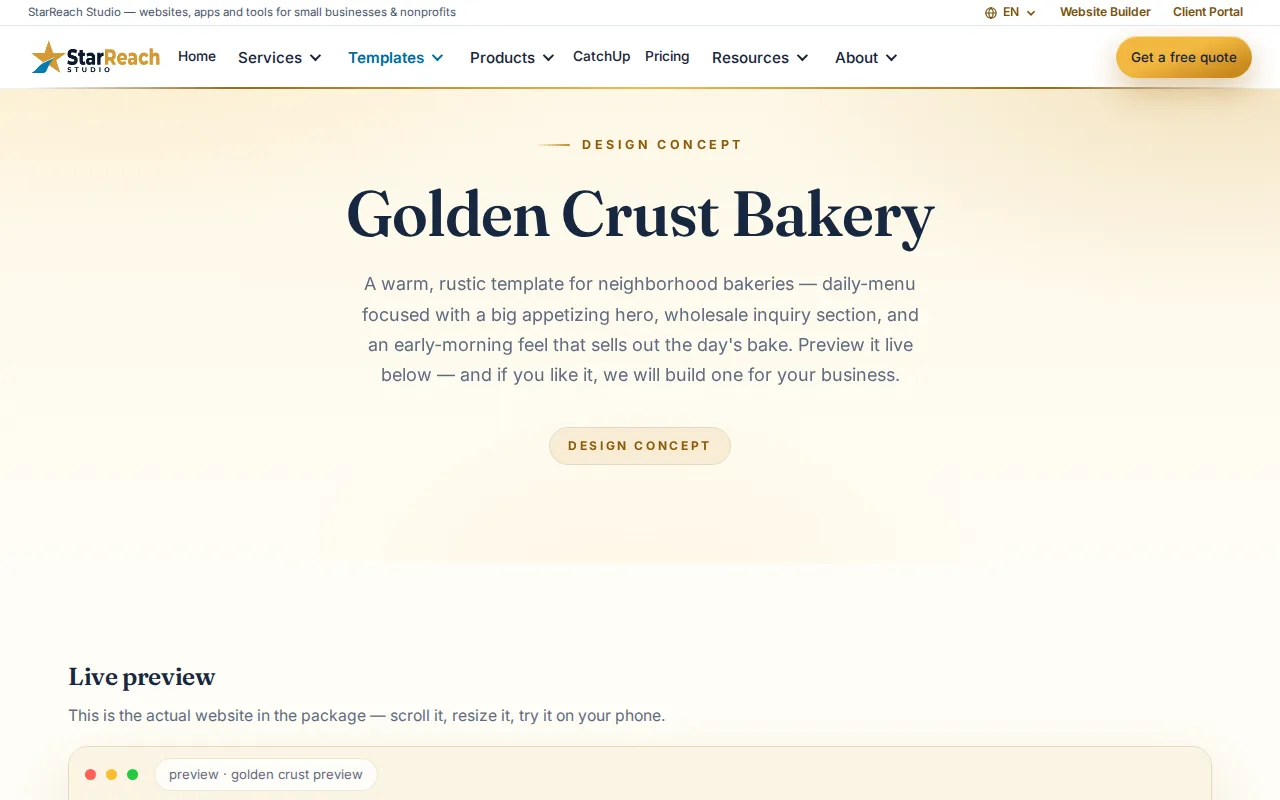
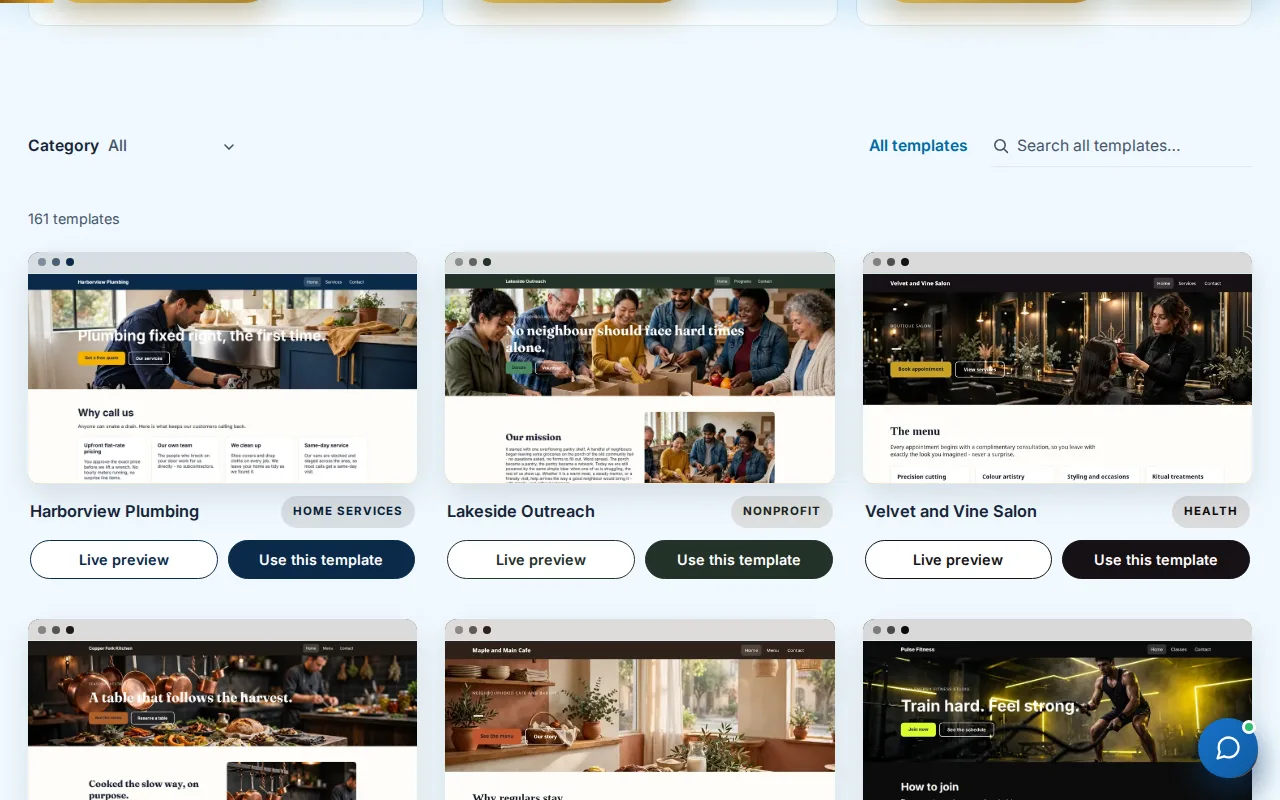
What being found looks like — real pages and live previews from this site.