
Case study — real work
hdf-global.org: a nonprofit website, built end to end.
Before StarReach existed, our founder designed, built, and still maintains the complete website of HDF Global — a Canadian nonprofit working in Malawi and Canada. This is that project: what it needed, what we built, and what it does today.
The challenge
Six programs, two countries, one tiny team.
HDF Global runs charitable programs across Malawi and Canada — education, vocational training, health, and community support. The organization needed a website that could:
- Explain the work clearly — every program understandable in seconds, by donors and by the communities served
- Accept donations online — one-time and monthly, with receipts donors actually receive
- Keep donors close — so a first gift becomes an ongoing relationship
- Stay maintainable — updatable by a small team with no technical staff
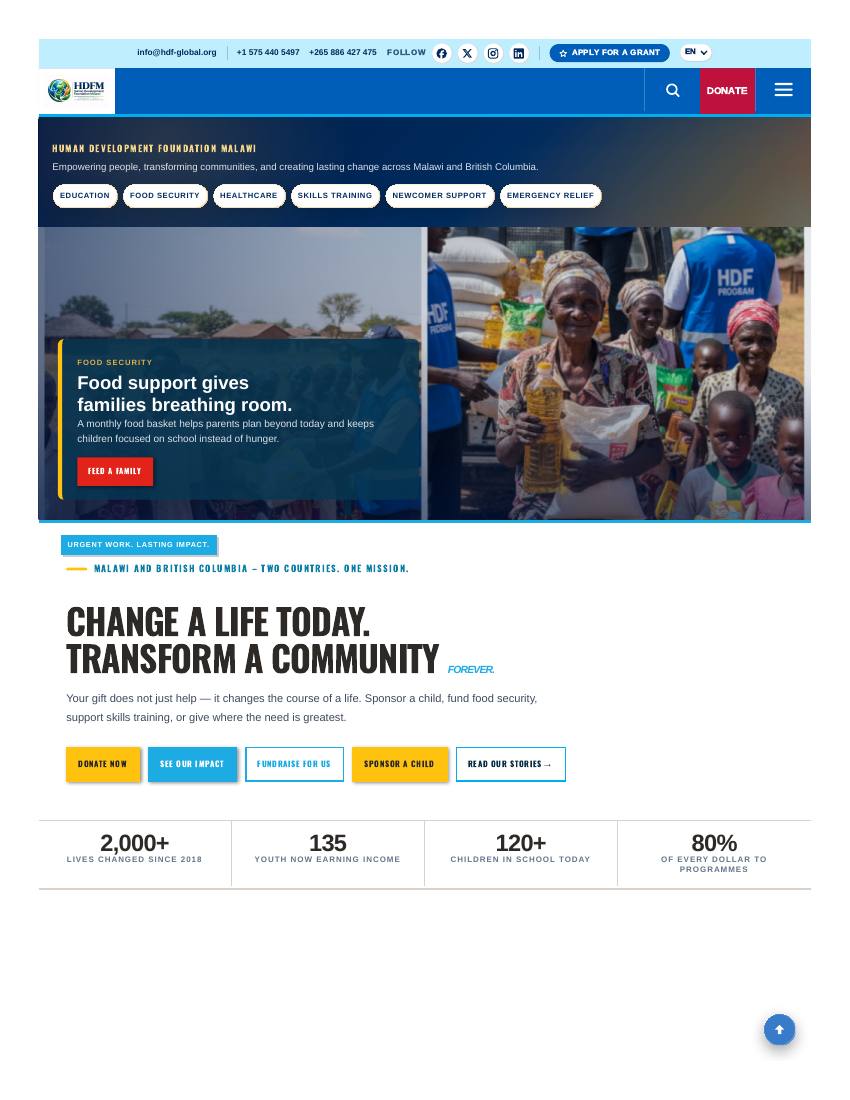
What we built
Decisions, not just pages.
Every part of the site exists for a reason. Here is what went in and why.
Program pages that explain themselves
Each program gets a clear page with its own story, photos, and next step — so a visitor understands the work without reading a report.
A donation flow built for trust
One-time and monthly giving with an optional fee top-up, an instant on-screen confirmation, and an automated email receipt for every donor.
A donor dashboard
Donors can sign in and see their own giving history — the kind of transparency that turns one-time gifts into repeat ones.
Follow-up that runs itself
First-time donors get a thank-you and, a month later, a real update on the work — automatically, without adding to anyone's workload.
Built for phones, in three languages
Mobile-first pages that load fast on low bandwidth, with translation support for English, French, and Kiswahili.
Forms that route to the right inbox
Volunteer, partner, and grant applications arrive structured and searchable — no lost emails, no spreadsheets.
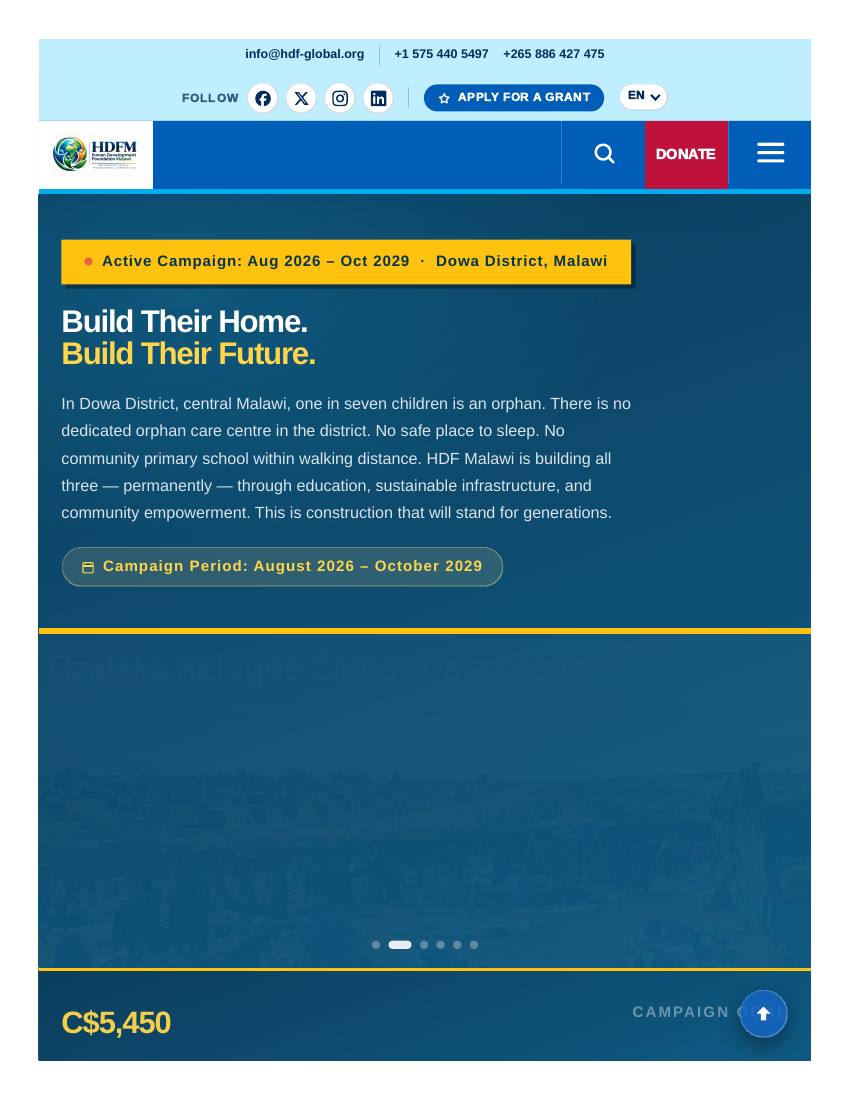
The build, in order
How it got here.
This is not a launch story. It is a working website with a history — built once, rebuilt where it mattered, and looked after ever since.
- 2018
The work begins
HDF starts its work in Malawi, and its founder builds the organization's first website himself — years before StarReach exists. He still maintains it today.
- The first build
One site, carrying everything
A complete WordPress website: the program pages, the donation system, a private donor dashboard, application forms, and the team email behind it — the build described above.
- September 2026
The donation popup, rebuilt from scratch
Giving moves off an embedded third-party form into a custom-built popup — one-time or monthly, preset or custom amounts, separate Malawi and Canada flows. It was the hardest problem on the site; its story is told below.
- Autumn 2026
Pages the team can run
Program, campaign, and donor pages are rebuilt as editable sections the team updates themselves. The Build Their Home campaign moves onto the same popup, and eleven leftover buttons from the old setup come out.
- Ongoing
Cared for, month after month
Updates, fixes, and small improvements on a rhythm — down to a stray icon that turned up inside the floating Give bubble and was chased out. The site also runs the organization's grant program, with its published application window.
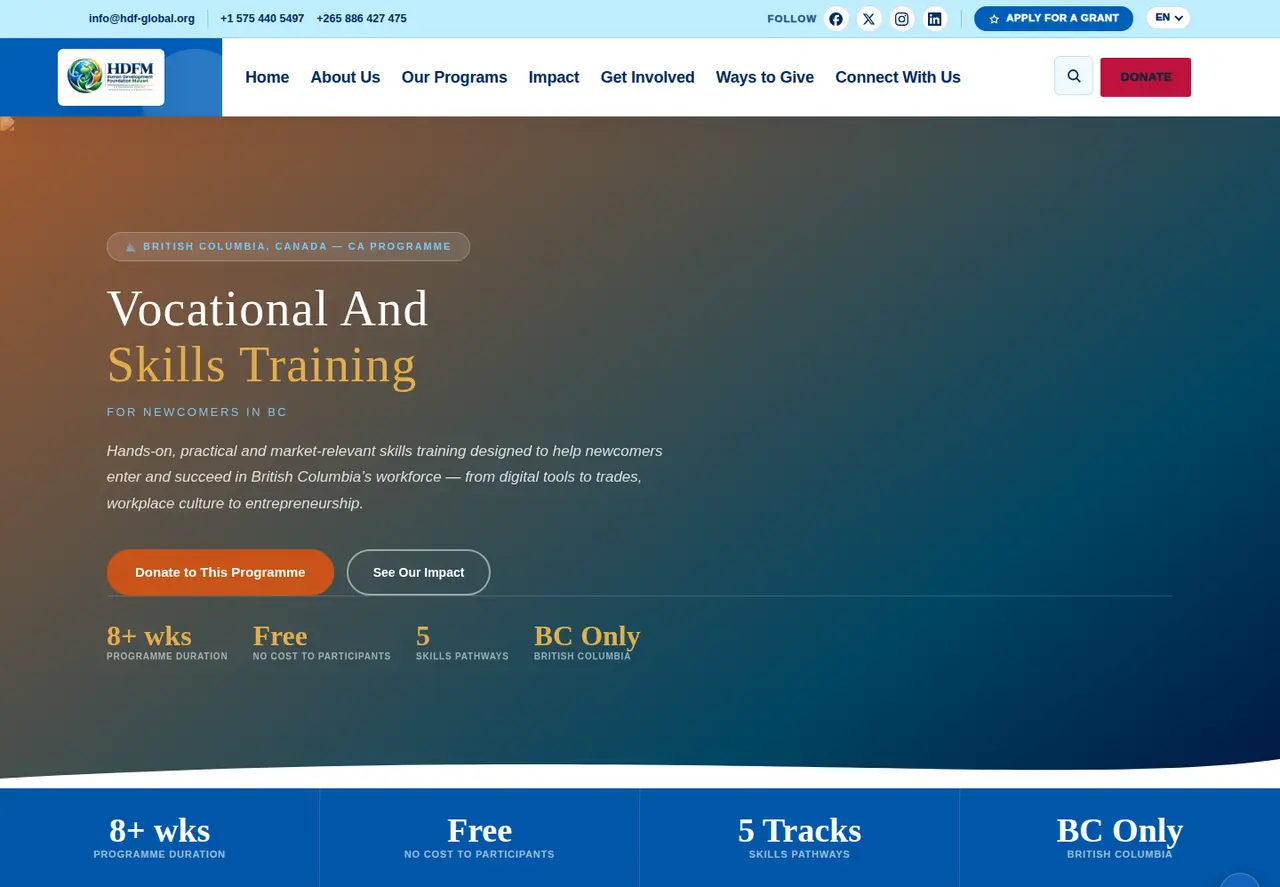
The design
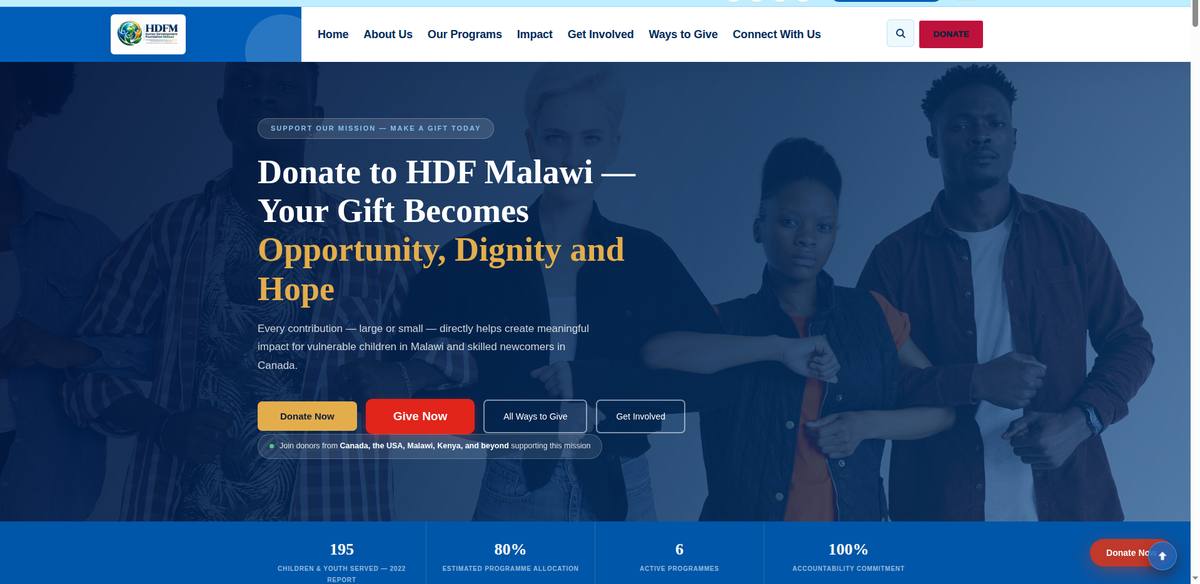
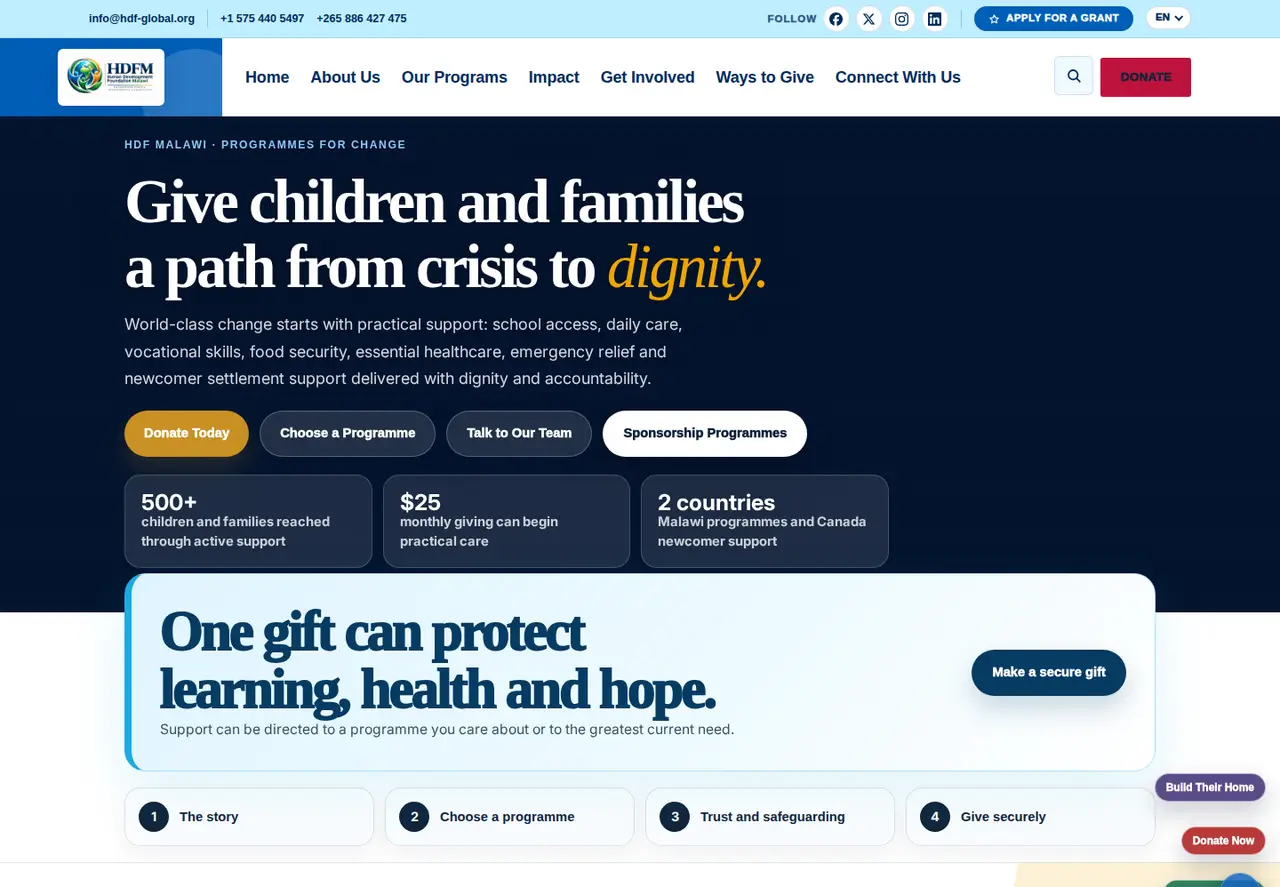
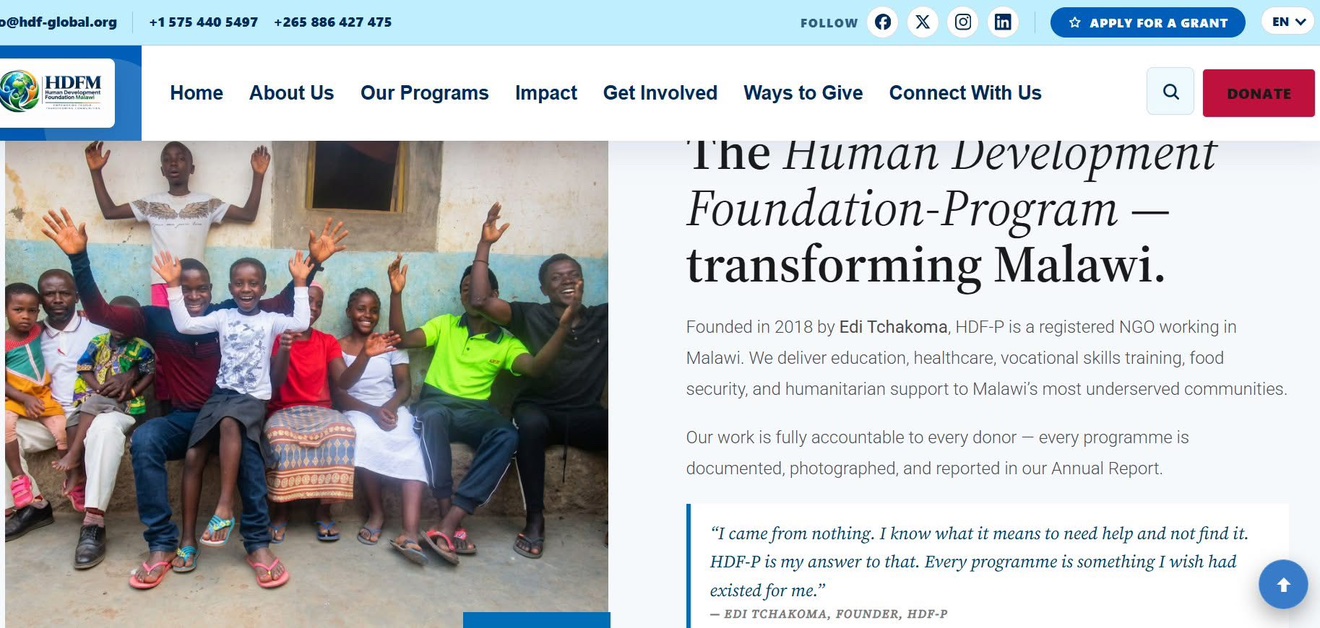
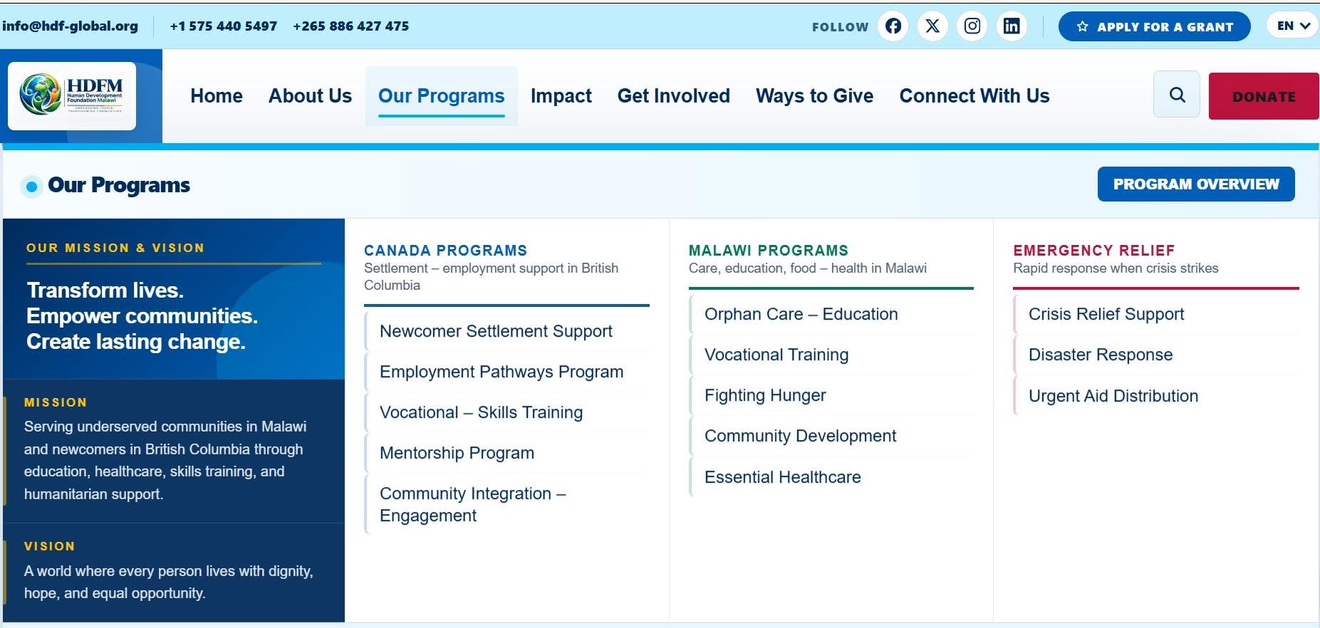
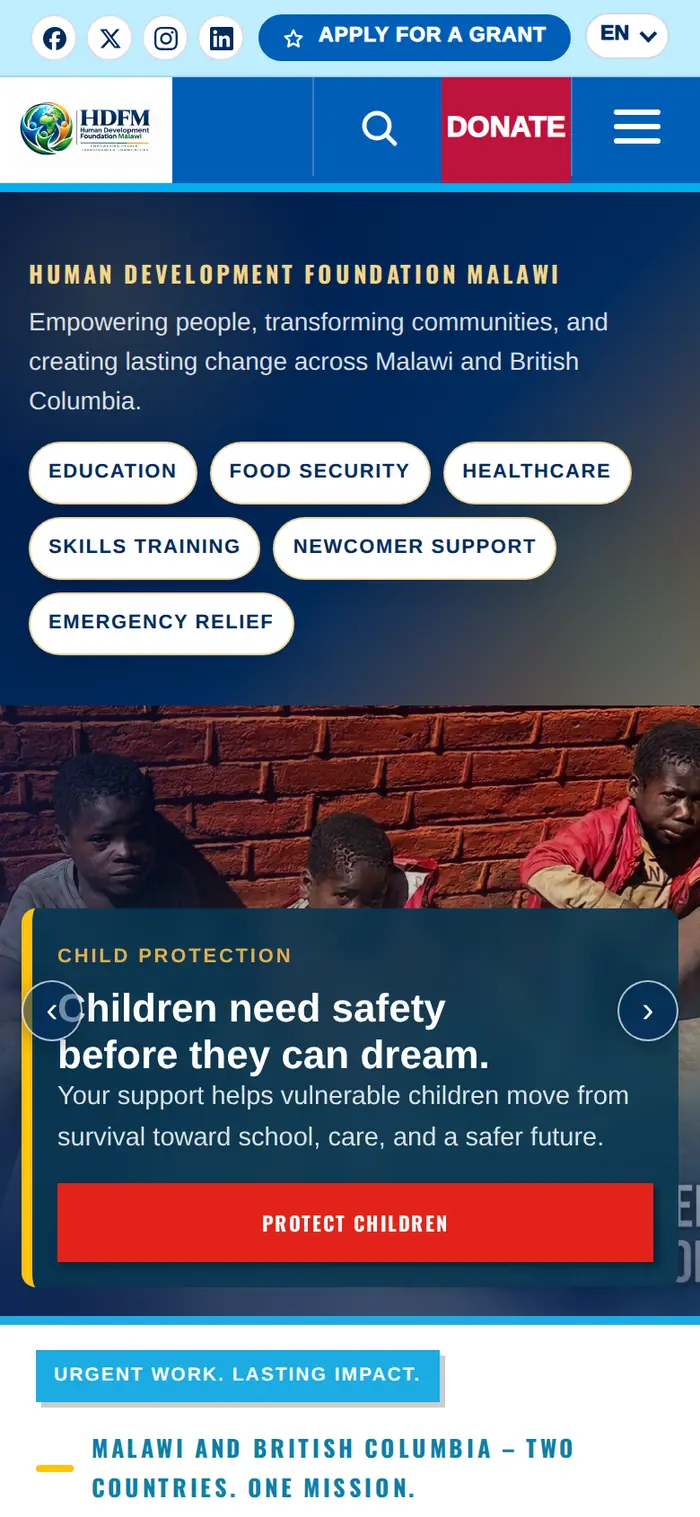
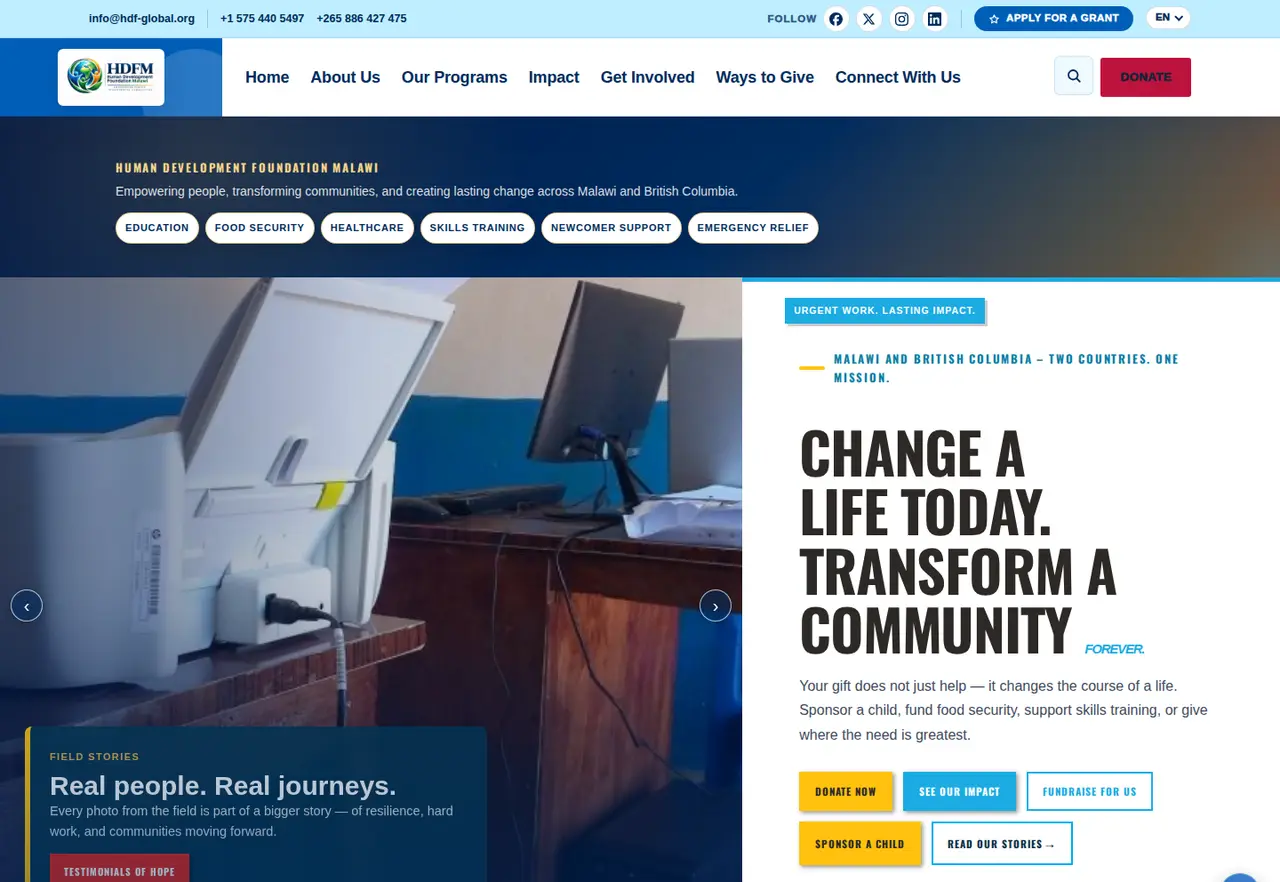
The design, in two views.
These are the design views for the HDF Global website — photographed from the design itself, so you can see exactly how the homepage and the programs overview are laid out.
The hardest problem
A donation form that fought back.
When we took stock of the site, giving ran through a form embedded from a third-party service, opened inside a popup. It was the heaviest thing on the site — the popup page alone carried 81 scripts and took about four seconds to load — and the most fragile: more than one popup setup had been layered in over time, and they interfered with each other. When the Donate page's popup failed, it failed quietly. The others kept working, so from the outside nothing looked broken.
The deeper problem was the order of events. A donor's confirmation waited on the service's bookkeeping — so the moment that should feel instant, the thank-you, was the slowest step of the gift.
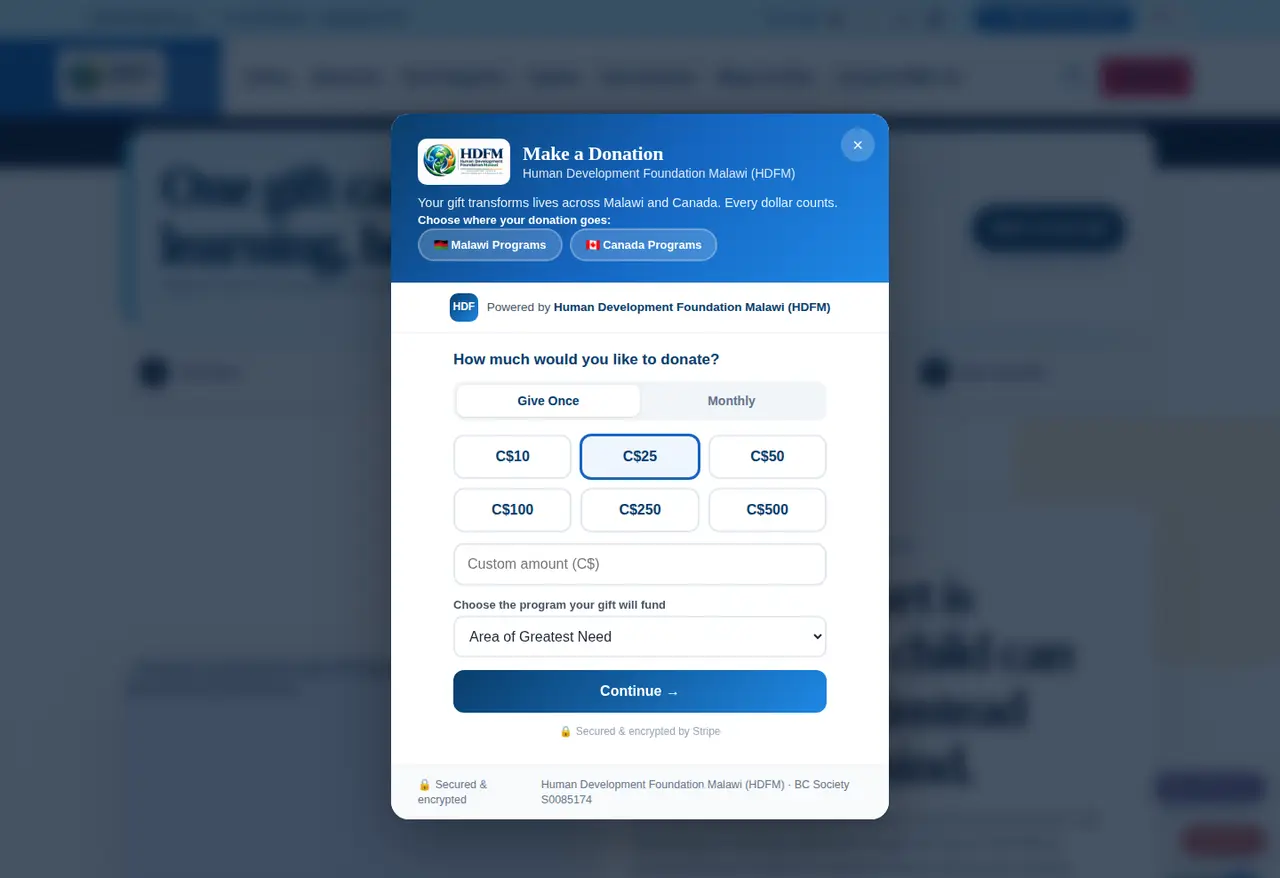
So the form was rebuilt from scratch as a small plugin of our own — the HDF Smart Donation Popup. One-time or monthly giving, preset amounts from C$10 to C$500 or a custom amount, a choice of program, and Stripe's card field, all inside the popup on any page. The flow was reordered around the donor: the moment Stripe confirms, the thank-you appears; the record-keeping follows in the background. Separate Malawi and Canada flows came with it, so a gift can be directed the way the donor intends.
Two older popup plugins came out the same week. What remains is one system, owned end to end — when something about giving needs to change, it changes in one place.
A closer look
Inside the donation flow.
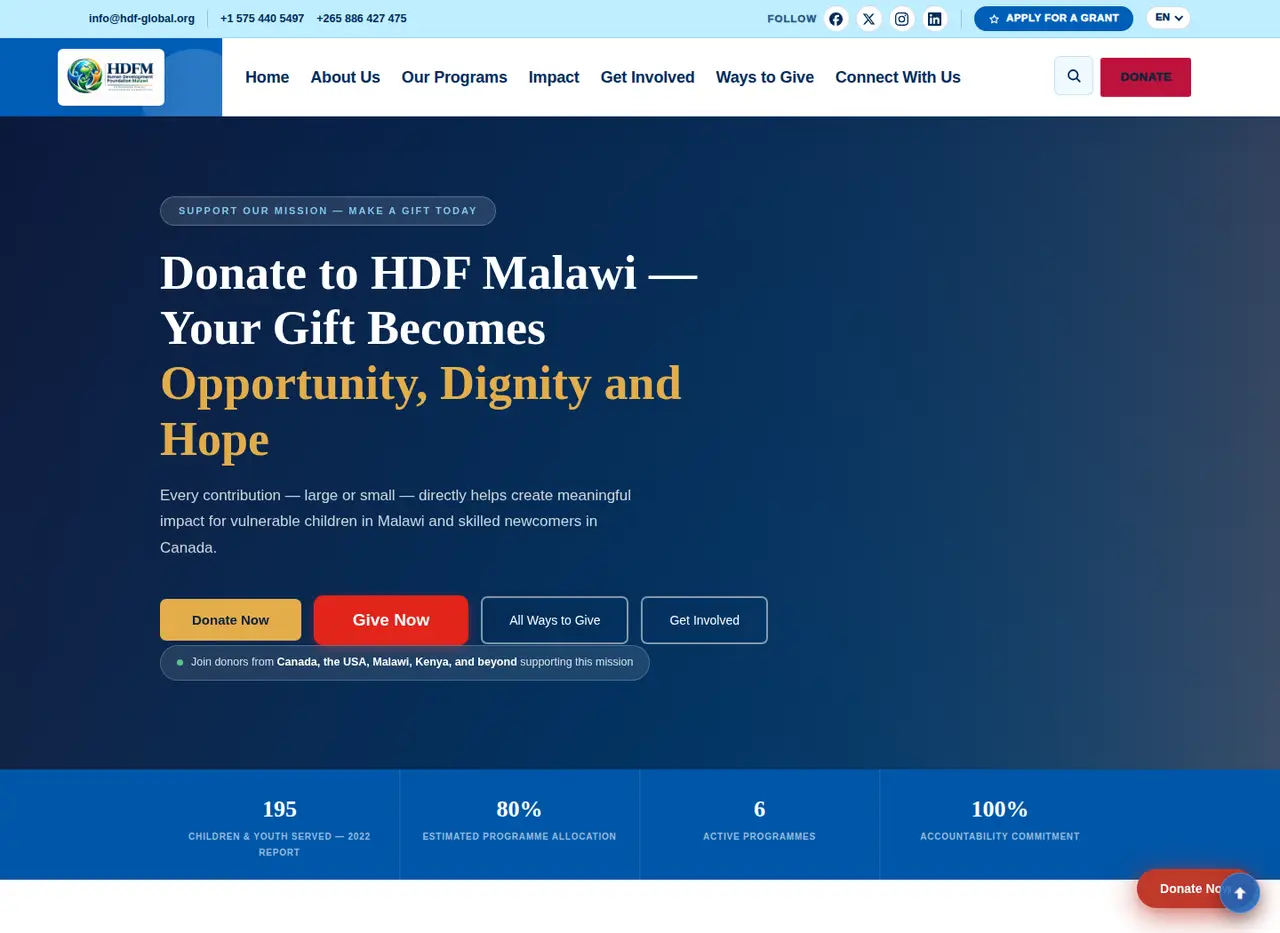
The journey a gift takes today, end to end — the same flow whether a donor arrives from the homepage, a program page, or a campaign.
- 1
It starts on any page
Donate buttons and a floating Give bubble ride along site-wide, so a reader who decides on a program page never has to go hunting for how to give.
- 2
The popup opens in place
One tap opens the donation popup over the page — the form in the section above. A visitor who prefers a full page gets the same system on the Donate page.
- 3
Stripe confirms — the thank-you is instant
Card details go to Stripe, never to the site. On Stripe's confirmation the donor sees a thank-you with the gift amount right away, and a receipt follows by email. The gift is written into the site's records in the background.
- 4
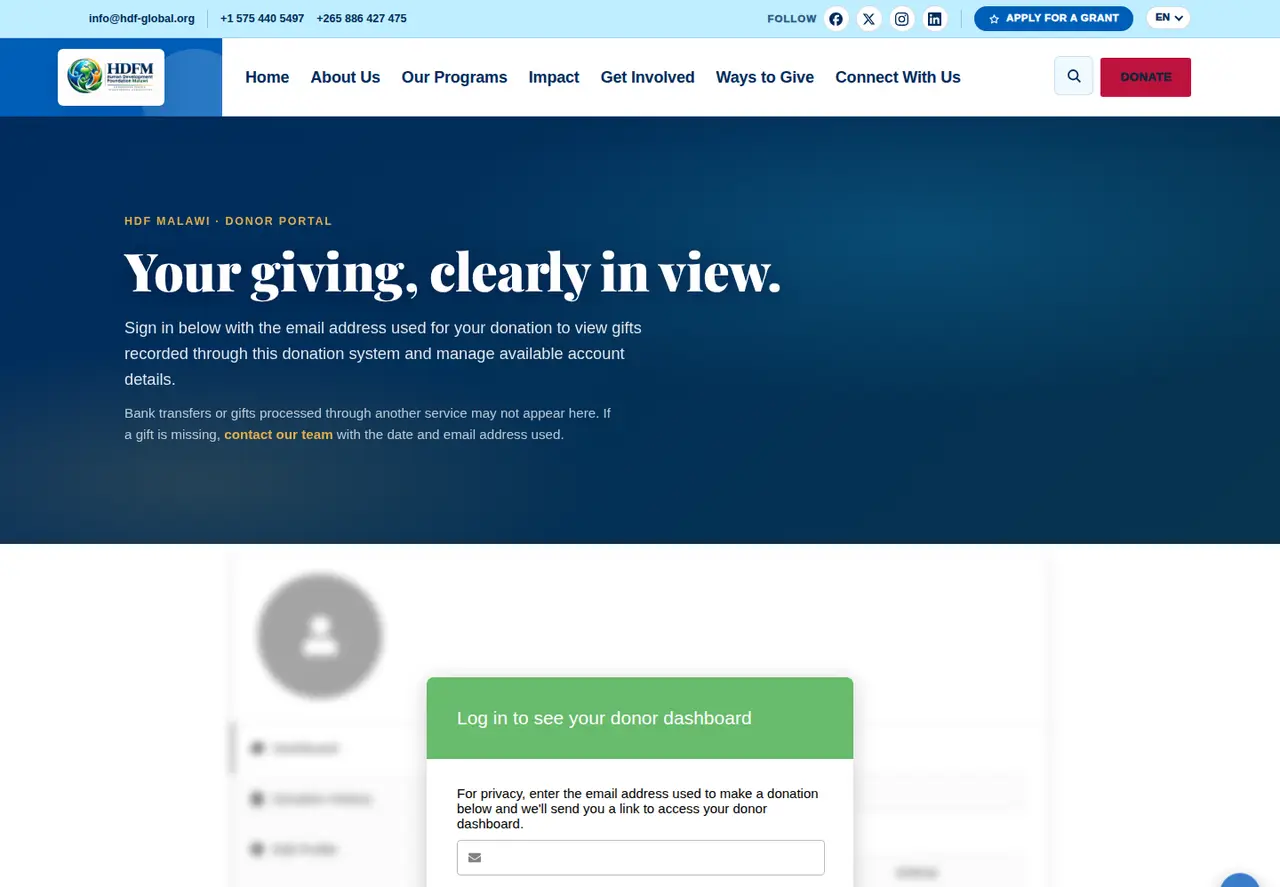
Afterwards, the donor dashboard
Donors return with the email they gave with — no password; the site emails them a sign-in link — and see the gifts this system has recorded for them. The dashboard itself stays private: the capture below is the door, not the room.
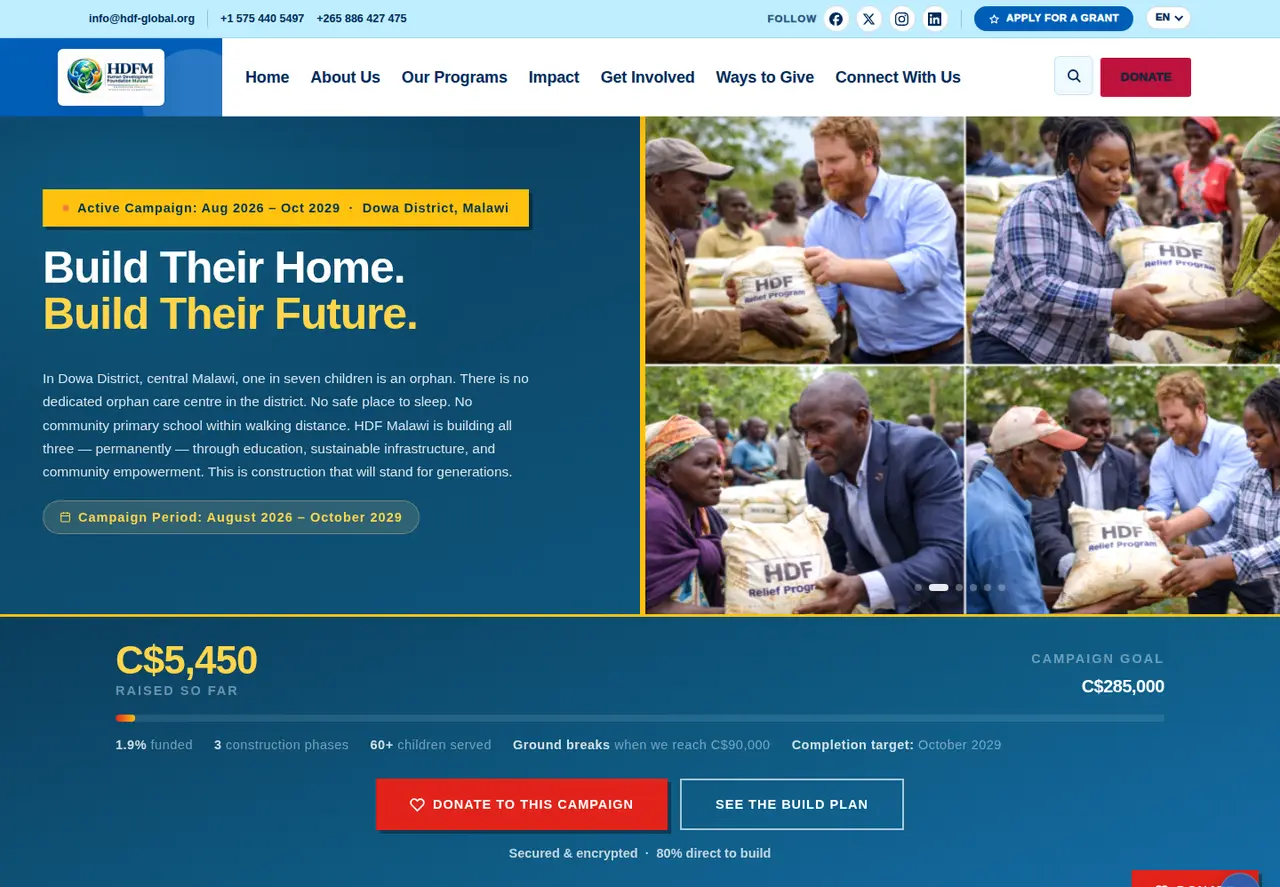
The live site today
More pages, running right now.
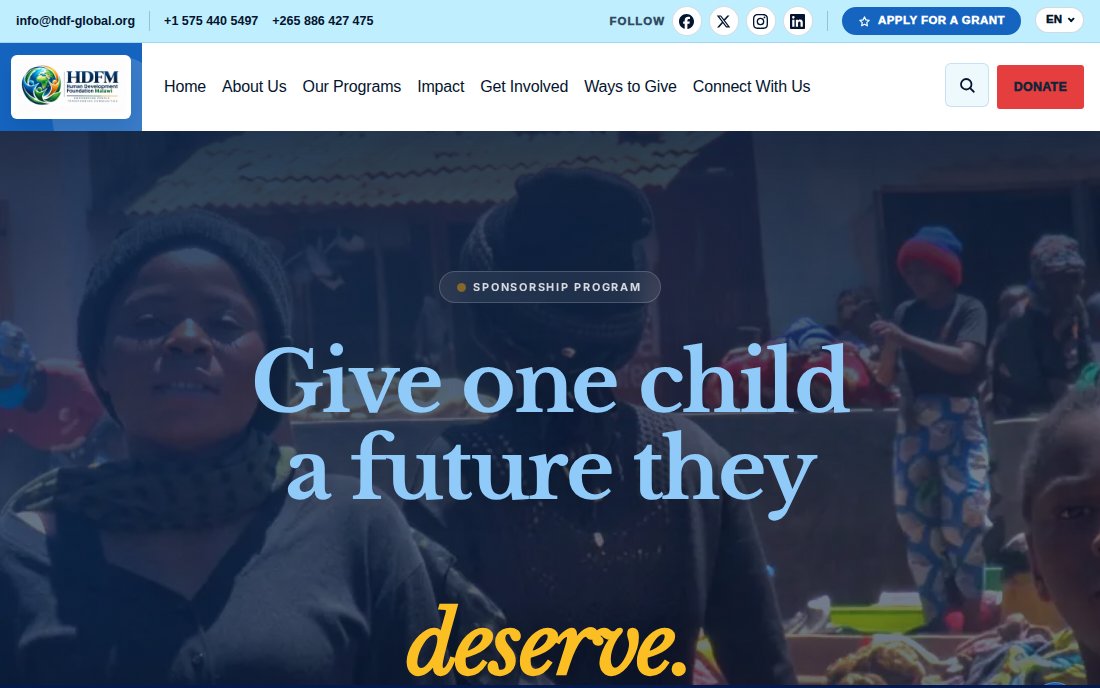
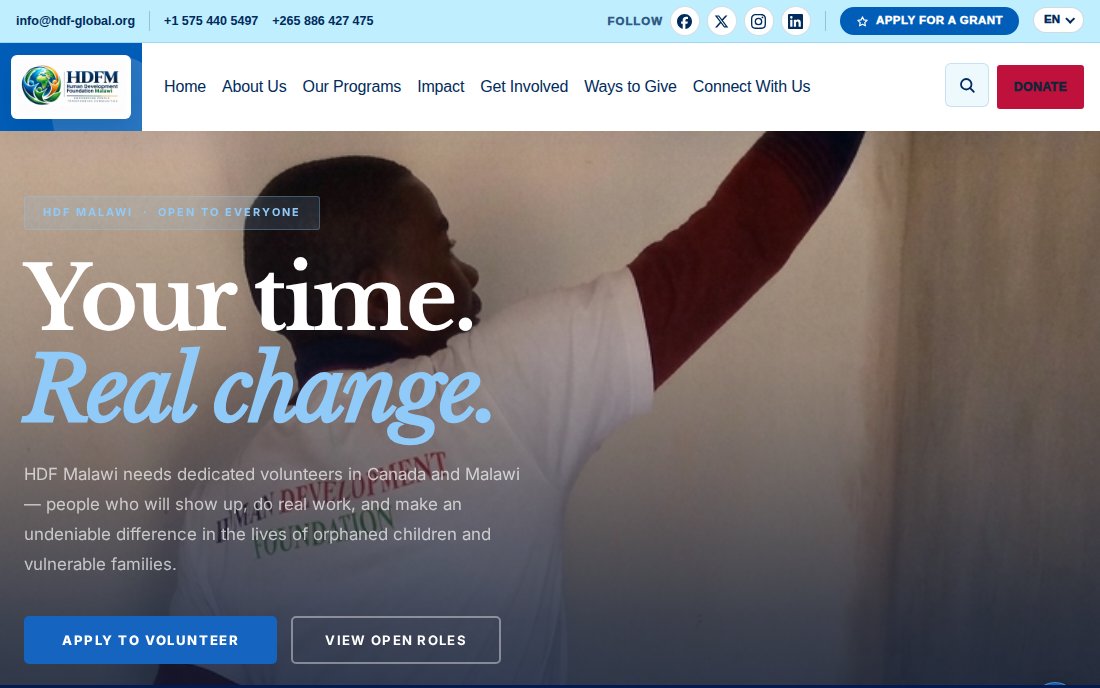
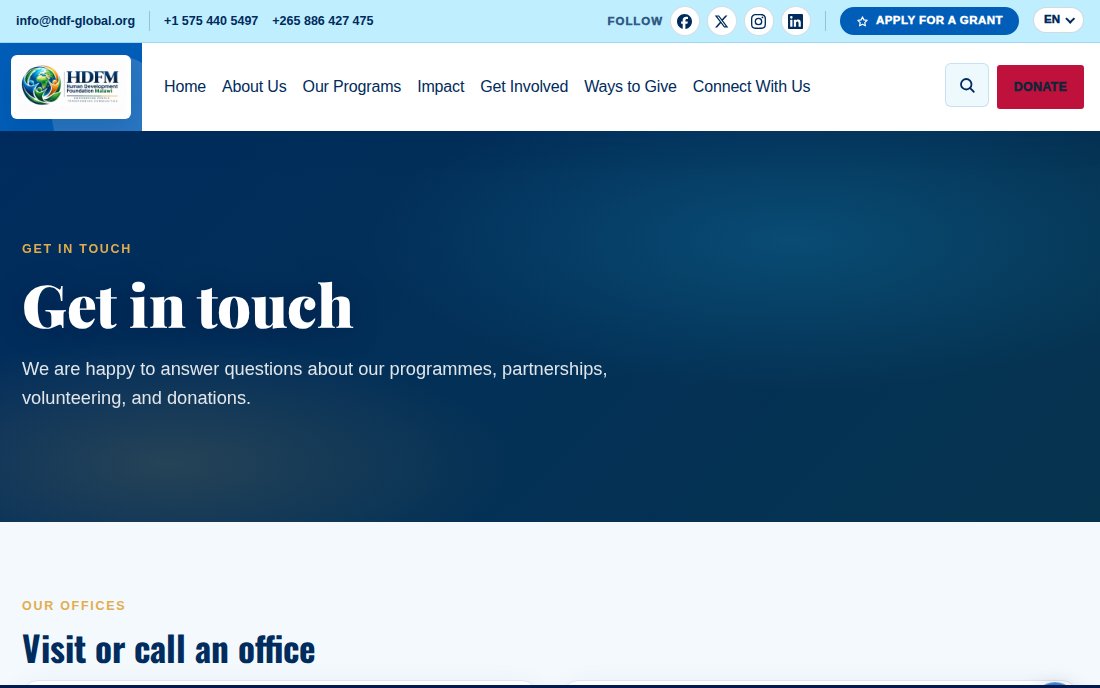
Three more corners of hdf-global.org as they look today — sponsorship, volunteering, and contact — captured from the live site in November 2026.
Outcomes
What we can say — honestly.
We do not publish another organization's traffic or fundraising figures, and we will not invent any here. What we can show is what the site does, every day:
The figures are the organization's to publish; what the build contributes is the structure underneath them. Every program has a real page a donor can read and a team member can update. Every campaign raises through the same popup and lands in the same records, so nobody has to reconcile three systems to answer a donor's question. And when HDF's own pages state the organization's reach — its programs, its registrations in Malawi and British Columbia, its published target for how much of each dollar goes to programs — a visitor can check every word of it on the live site, one tap from this page.
It also lasts because it is looked after. The same hands that built the site still maintain it, so the answer to "can the site do this?" is usually a small change away — not a new project, and not a new contractor starting from zero.
- It takes real donations — one-time and monthly gifts flow through the site with receipts donors actually receive.
- Donors stay connected — they can log in, see their history, and get updates without asking.
- The team can run it themselves — the site is built to be updatable by the nonprofit's own people, with no technical staff required.
- It is maintained, not abandoned — month after month: updates, fixes, and improvements, the same care we offer every StarReach client.
We designed, built, and still maintain the entire hdf-global.org website — every page, the donation flow, the donor dashboard. It is real work we are proud of, and it is the standard we bring to every project.
Your project could be next.
Tell us what you do and what is not working. We will take it from there — in plain language.
Prefer email? Write to hello@starreach.ca — a real person will reply.